

Alliance Report
Sept. 30, 2026
Issue 26/20
The leading voice of nonprofits on postal issues for over 45 years.
Copyright 2025: Alliance of Nonprofit Mailers—All rights reserved.
The Alliance of Nonprofit Mailers is a 501 (c)(4) nonprofit organization established by nonprofits for nonprofits.
NPR Poll Says Trust in USPS Delivering Mail-In Ballots on Time has Fallen
NPR on September 23, 2026, reported that according to a new NPR/PBS News/Marist poll, “[t]he U.S. Postal Service is losing more of the public’s trust that it will deliver mail-in ballots on time.” “While the majority of registered voters still say they feel confident or very confident about timely USPS deliveries of election mail to voters and election officials,” NPR reported, “that share dropped 13 percentage points over the past two years — from 71% in 2024 to 58% this year.” “Trust in the Postal Service’s on-time delivery of election mail has returned to levels last seen in the fall of 2020,” it said, “during the height of the COVID-19 pandemic.”
“In a statement,” NPR said, “USPS says it delivered more than 233 million pieces of election mail this fiscal year through the end of August, with an on-time score of 97.94%.” “’There has been a lot of misinformation recently about the Postal Service’s role in the electoral process, which may have had an impact on public sentiment. But the Postal Service’s actual performance metrics speak for themselves,’ the statement says.” “’Postal employees take great pride in their responsibility to support the democratic process.’”
Brookings Institute on USPS Network Changes and Impacts on Mail-In Ballots
Brookings Institute on September 23, 2026, published a research article on changes to the USPS network and impacts on mail-in ballots in the 2026 mid-terms. Elena Patel, Brookings Institute, provides an in-depth analysis of the USPS’ Regional Transportation Optimization (RTO) change implemented in 2025 and its impact on mail-in ballots to date for the 2026 mid-terms as well as potential impacts for the mid-terms in November.
“In 2025,” Patel said, “the Postal Service changed how mail leaves thousands of post offices.” “Mail sent from those offices can now wait an extra day before beginning its journey,” she said, noting that “[v]oters send their mail ballots back through those offices, and unlike most mail, those ballots must arrive by a deadline.” “The 2026 primaries were the next federal elections after this change and are the best available guide to what that may mean,” she said, noting that “November will be the first general election since the change, with a far larger electorate.”
In addition to the USPS’ RTO initiative, Patel noted “[t]hree other developments followed, each relevant to whether a mailed ballot counts.” “In December 2025,” she noted, “USPS confirmed that a postmark may no longer show the day a piece of mail was sent.” “In June 2026,” Patel noted, “the U.S. Supreme Court left states free to count ballots that arrive after Election Day, provided they were postmarked on time.” “Finally in August,” she said, “at the direction of a March executive order, USPS issued a rule setting new requirements for ballot envelopes and for the data election officials must share with the agency about the ballots they mail.” “A federal court blocked that rule; and on September 14, the Supreme Court left the block in place, so it will not apply for the November general election,” she said.
But Patel noted that “RTO is different.” “It changed how mail moves, not how ballots are counted,” she said, noting that “[f]or a ballot mailed close to the deadline, an extra day can be the difference between being counted and rejected.”
The research analyzes the impact of RTO on ballots being rejected for arriving late in the 2026 primaries in California, North Carolina, and Washington. “I find that RTO exposure roughly doubled the rate at which mail ballots were rejected for arriving late,” Patel said. “Rejections for every other reason did not move differently where RTO applies, and before RTO, the places it now covers rejected late ballots at about the same rate as places it does not, in both the two preceding federal primaries and across a decade of general elections nationally,” she explained.
“Using data from the 2022 and 2024 general elections,” Patel reported, “I estimate that roughly 40% of mail ballots returned by voters (16.6 million) come from places where the nearest post office is covered by RTO.” “If the same relationship holds in November,” she said, “tens of thousands of additional ballots could be rejected for arriving late, against a recent average of about 115,000 late rejections.” “The remedy is not complicated,” Patel said. “Voters in covered places can mail their ballots a few days earlier, consistent with what USPS has long advised.” “Knowing which places those are is harder,” she cautioned, noting that “USPS and election officials should make that easy to find out.”
Patel said that “[r]oughly 121 million of the country’s 257 million voting-age adults in the 48 contiguous states and Washington, D.C., live nearest to an [RTO] covered post office.” Her research provides a table comparing them with those whose nearest post office is not covered under RTO. “Half of them (49.2%) live in a small town or rural area, compared to just 8.8% for those not covered,” she said, noting “[t]hey are also more elderly, poorer, and more likely to have a disability.”
“RTO nearly doubled the share of ballots rejected for arriving late,” Patel reported. She estimated that “across all three states, RTO exposure increased the rate at which mail ballots were rejected for arriving late by 96%, or about one percentage point.” She continued,
“The size of the effect differs by state: the rate rose about 142% in Washington (1.1 points), 86% in California (0.9 points), and 61% in North Carolina (1.9 points). North Carolina’s proportional increase is the smallest because it is scaled by its baseline rejection rate, which was already several times higher than in the other states. Its estimate is also the least statistically precise, likely because voters in two-thirds of its counties returned fewer than 100 mail ballots in the 2026 primary. Estimates for California, Washington, and the three taken together are statistically significant, meaning chance is an unlikely explanation for the observed increase.”
“40% of mail ballots in recent elections came from places RTO covers,” Patel reported. “Nationally,” she said, “two in five mail ballots are exposed to RTO: 16.6 million out of the average 41.8 million.” “Importantly, this is an estimate of exposure,” she clarified, “not of harm: it is the volume of mail voting that happens where the transportation change has added a day before those ballots enter the processing network, not a count of ballots delayed or rejected.”
“If RTO has the same effect in November, national late rejections could rise by tens of thousands,” Patel concluded. She summed up the results of her research saying that “RTO added a day to the start of a ballot’s return journey at more than two-thirds of the country’s post offices.” “Those places account for roughly 40% of the country’s mail ballots,” she said, noting that “[i]n the 2026 primaries, exposure to RTO roughly doubled the rate at which mail ballots were rejected for arriving late.” “November is the first general election held under the new schedule,” she said, noting that “[t]he most reliable remedy belongs to the voter.” She continued,
“RTO’s schedule is fixed, and the day it adds applies to any ballot that reaches a post office after the day’s dispatch has left. A voter controls when their ballot is mailed, and mailing it a few days earlier more than offsets the extra day RTO adds. USPS advises sending a completed ballot at least seven days before it must be received.”
“The difficulty for the voter is knowing whether a given post office is one that RTO covers,” Patel stressed, noting that “[v]oters also have more than usual to keep track of this year.” “Since last December, the Postal Service has affirmed that a postmark may no longer reliably show the day mail was sent, the U.S. Supreme Court has left the postmark as the proof that a voter met a deadline, several states have ended the grace periods that once cushioned late-arriving ballots, and a federal rule that newly requires election officials to file voter mailing data with the Postal Service when ballots are sent was issued in August and blocked by the courts,” she said.
“Voters in covered places need to know about the change before they mail their ballots,” Patel emphasized. “Election officials can tell them—as can state and local governments, civic groups, campaigns, and notices posted where people vote,” she said, noting that “[i]mportantly, this message can be targeted, county by county, to ensure that those voters who are most likely to be affected are also the ones receiving the messaging.”
“The Postal Service should also make those places easier to identify,” Patel stressed, noting that “[t]he RTO determination is public, filed with the Postal Regulatory Commission, and USPS reports regular updates on implementation to the commission as it proceeds.” “Both are filed with regulators, not published for voters,” she said, noting that the “USPS’s own service-standards tool tells customers how long mail is expected to take from their zip code.” “It does not say whether that expectation changed under RTO,” she noted, stressing that “[a] voter who does not know that something changed would have no reason to mail a ballot earlier than usual.” “Adding that to the tool would give them one,” she suggested.
“Everything needed to act on this is already public,” Patel concluded, but said “[w]hether it reaches voters is the difference between allowing for an extra day in transit and having a ballot arrive too late to count.”
White House Nominates Jeffrey Zisk as Postal Regulatory Commissioner
The White House on September 28, 2026, nominated Jeffrey Zisk to serve a term as commissioner on the Postal Regulatory Commission (PRC). There are actually two different PRC terms that Zisk was nominated for, one expiring later this year on November 22, 2026, and another term expiring November 22, 2032. The nomination was received in the Senate and referred to the Committee on Homeland Security and Government Affairs.
Zisk currently serves on the Board of Directors for the Prostate Cancer Foundation (PCF) and managing director of Surrey Ventures. His past career roles include Executive Vice President of Cart.com, Founder & CEO of FBFlurry, and Founder & CEO of Snowfall Technologies LLC.
USPS Adjusts “Service Expectations” for Priority Mail and USPS Ground Advantage for Noncontiguous States and Territories
The USPS on September 25, 2026, announced that “[e]ffective October 1, 2026, the Postal Service is adjusting service expectations for Priority Mail and USPS Ground Advantage packages for noncontiguous states and territories of the United States.” “In addition,” it announced, “the Postal Service is aligning the transportation for USPS Ground Advantage packages under one pound with the transportation used for over one-pound packages such that noncontiguous USPS Ground Advantage packages will now primarily utilize surface transportation.” “These changes do not impact any Market Dominant service standards such as for First-Class Mail,” the USPS stressed.
The USPS said the changes apply “to Alaska, Hawaii, American Samoa, Guam, the Northern Mariana Islands, Puerto Rico, and the U.S. Virgin Islands,” as well as “packages sent to and from the Freely Associated States (the Federated States of Micronesia, the Republic of the Marshall Islands, and the Republic of Palau).”
The USPS said it is making the changes “to align with operational capabilities, ensure safety of the mail and set realistic customer shipping expectations.” “The Postal Service also seeks to increase customer satisfaction in these areas by providing more realistic service expectations in line with available transportation options and in consideration of travel distance,” it said, noting that “[t]he simplified product selection allows customers to choose between lower costs and faster service.”
“Simplifying transportation will also allow employees to focus on operational improvements to target Priority Mail items incorrectly identified as HAZMAT,” it said. The USPS said it “continues to seek reductions in Hazardous Materials (HAZMAT) risks in our air transportation network.” “USPS Ground Advantage volume to and from the noncontiguous states and territories of the United States will now primarily be transported via surface transportation and will have the same service expectations regardless of weight,” it said, noting that “[t]his simplifies product transportation and reduces the risk that HAZMAT items utilize air transportation.”
What are the changes? For Priority Mail, “packages to or from the following locations will receive a 2 to 4-day service expectation: Alaska, Hawaii, American Samoa, Puerto Rico and United States Virgin Islands,” the USPS said, noting that “[t]he service expectation was previously capped at 3 days but has been adjusted due to travel time and time zone considerations.”
“Priority Mail packages to or from the following locations will receive a 2 to 6-day service expectation: Guam, Northern Mariana Islands and the Freely Associated States,” the USPS said, noting that “[t]he service expectation was previously capped at 3 days but has been adjusted due to travel time and consideration of the Pacific locations past the International Date Line.”
“This is an alignment of service expectations with actual performance and transportation capabilities,” the USPS said, noting that “Priority Mail package transportation modes and timing should not be impacted by the newly adjusted service expectations.” “Currently available expedited services for these areas will continue in the form of Priority Mail Express,” the USPS noted, “which will not change as a part of these adjustments.”
“USPS Ground Advantage packages between the contiguous United States and the following locations will have a 10-day or more service expectation: Alaska, Hawaii, American Samoa, Puerto Rico, United States Virgin Islands, Guam, Northern Mariana Islands and the Freely Associated States,” the USPS said, noting that “[d]ays will vary due to the range of distances between some locations.” “Most transit days have been adjusted, and some service expectations may be significantly longer than 10 days,” it said, explaining that “USPS Ground Advantage products under one pound to and from noncontiguous locations were previously transported via both air and surface.”
“Regardless of weight,” it said, “noncontiguous USPS Ground Advantage packages will now primarily utilize surface transportation.”
For additional information on service expectations, the Postal Service has the following resources:
- Customers can look up service expectations on usps.com for mailings from one ZIP Code to another on a particular mailing date. The search results will display the available mail classes along with the expected delivery dates for each: https://postcalc.usps.com/ServiceCommitments.
- Detailed file specifications for downloadable files with the new expectations can be accessed on PostalPro https://postalpro.usps.com/operations/service-standards.
- API specs are available now on the USPS Developer Portal https://developers.usps.com/apis and files can be accessed here: https://developers.usps.com/service-standards-file-download-v3.
Unlike with Market Dominant mail service standards, the USPS is not required to seek an advisory opinion from the Postal Regulatory Commission (PRC) when changing service standards/expectations for its Competitive Services products.
USPS is Still Delivering for Dolly (The Late Entertainer’s Imagination Library sends books to children around the world)
[The below article appeared in the USPS’ Link publication on September 22, 2026, and is reprinted below. The Dollywood Foundation is a member of the Alliance of Nonprofit Mailers, with its Vice President of Operations, Samuel Wolfe, slated to become one of the Alliance’s MTAC representatives starting with the October MTAC meeting.]
 Beloved singer-songwriter, actor and businesswoman Dolly Parton died Aug. 25, but her Imagination Library lives on with the Postal Service helping to deliver her books.
Imagination Library mails free age-appropriate books each month to registered children from birth until age 5. Parton started the childhood literacy program in 1995 to honor her father, a sharecropper who couldn’t read or write. It is headquartered in her hometown of Sevierville, TN.
Samuel Wolfe, vice president of operations at the Dollywood Foundation, oversees Imagination Library’s U.S. and global mailing partnerships.
“What started as a very small program from the heart and a way to give back to her community of Sevier County has grown into the world’s largest book-gifting organization 31 years later. We operate in five countries around the world, mailing 3.6 million books per month across all those countries — with 95 percent of that 3.6 million right here in the United States,” Wolfe said.
 Dolly Parton thanks former Sevierville, TN, Pigeon Forge Station Letter Carrier Regina Seaton and USPS in 2007 for helping deliver nearly 10 million books for the Imagination Library program.
Imagination Library mails books to children in 60 percent of U.S. ZIP Codes, he said.
“Children receive books throughout the country, the Virgin Islands and remote areas in Alaska, so having a reliable and affordable mail service makes what we do possible. Last year, we mailed about 40 million books through USPS,” Wolfe said.
In 2018, the program celebrated its 100 millionth gifted book with a ceremony at the Library of Congress in Washington, DC, where Parton donated her “Coat of Many Colors” book to the collection. The program recently celebrated passing 300 million gifted books.
“As we’re processing our next mailing list for the month, it looks like it’s going to be a record of new enrollments into the program. There’ll be even more books going out because of her legacy and the love people have for her who are enrolling in the program,” Wolfe said.
Postal Service employees at the Knoxville, TN, Business Mail Entry Unit find meaning in the program.
Trey Dunn, the Knoxville BMEU’s bulk mail supervisor, said he handles 60-100 pallets of Imagination Library’s books a day.
“It’s just good to be a part of something that forwards the education of the children,” Dunn said.
“Imagination Library is a major mailer for the Post Offices. A lot of people here grew up on Dolly and benefited from the Imagination Library and her philanthropy,” said Postmaster Michael Loomis, who oversees mail delivery to the organization’s headquarters as well as the Dollywood theme park in nearby Pigeon Forge.
Children enrolled in the Imagination Library also receive a letter from Parton that comes with their welcome and graduation books.
“We hear stories from families about the anticipation of the books arriving in the mail. Mail carriers are delivering those, and I think they love the excitement of delivering the books just as much as the families do receiving them,” Wolfe said.
USPS Piloting Marketing Mail Optimized Delivery
The National Postal Mail Handlers Union (NPMHU) on September 21, 2026, advised its members that the USPS will be pilot testing a new “Marketing Mail Optimized Delivery” proof of concept. The concept focuses on conditions where a delivery point does not receive First-Class Mail for a given day, so Marketing Mail would be deferred for delivery for a maximum of one day. The concept will be tested in Austin, TX and Boston, MA.
USPS August Financials
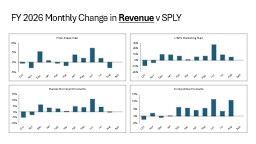
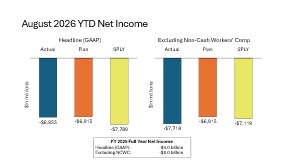 The USPS on September 24, 2026, filed its unaudited financial reports for August 2026 with the Postal Regulatory Commission (PRC). The USPS’ loss for FY2026 through August is $7.7 billion, more than the Same Period Last Year (SPLY) or $6.9 billion and more than the USPS’ plan of a $6.9 billion loss.
The USPS’ unrestricted liquidity at the end of Quarter 3 remains at $9.4 billion, compared to prior quarters shown left.

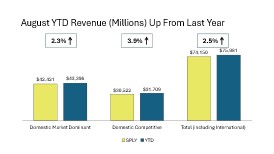
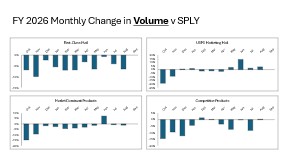
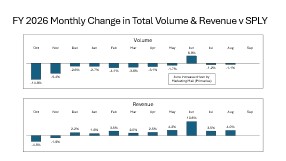
For the month of August alone, USPS volume was down 3.9% compared to SPLY and revenue was up 2.5%.

Into the Postal Weeds…
For those who live in the “postal weeds,” and are looking for news on mail entry, preparation, discounts, incentives, and more, this column in the Alliance Report will be right up your alley! We won’t go all the way into the weeds…but we will offer up highlights on useful resources and mailing standard changes.
| · Postal Service Recommends 2026 Holiday Mailing and Shipping Dates. The USPS has published its recommended 2026 holiday mailing and shipping dates. For expected delivery before Dec. 25, the USPS advises customers to send mail and packages by dates ranging from Dec. 16 to 19. |

Leave a Reply